I had a flu virus in January. It knocked me out for most of the New Year. To be honest I’ve only ever had the OG flu once in my 20’s and, if you’ve had it, you know that death is actually more preferable but this was pretty bad. Consequence was, for this year, I kind of missed my publication of the paperback version of my novel Quint for Jan 16th.
However I’m overjoyed to say that, by the Gods, the Amazon Kindle edition of Quint is available for the month of Feb for…and get this… only 99p for the whole month.
So if you didn’t buy it in hardback (and I can’t stand those) and you didn’t buy it in paperback (which sits real pretty in a pocket or neatly on your bedside table or the place above in your nook) it reads nicely well on that device you neglect from time to time.
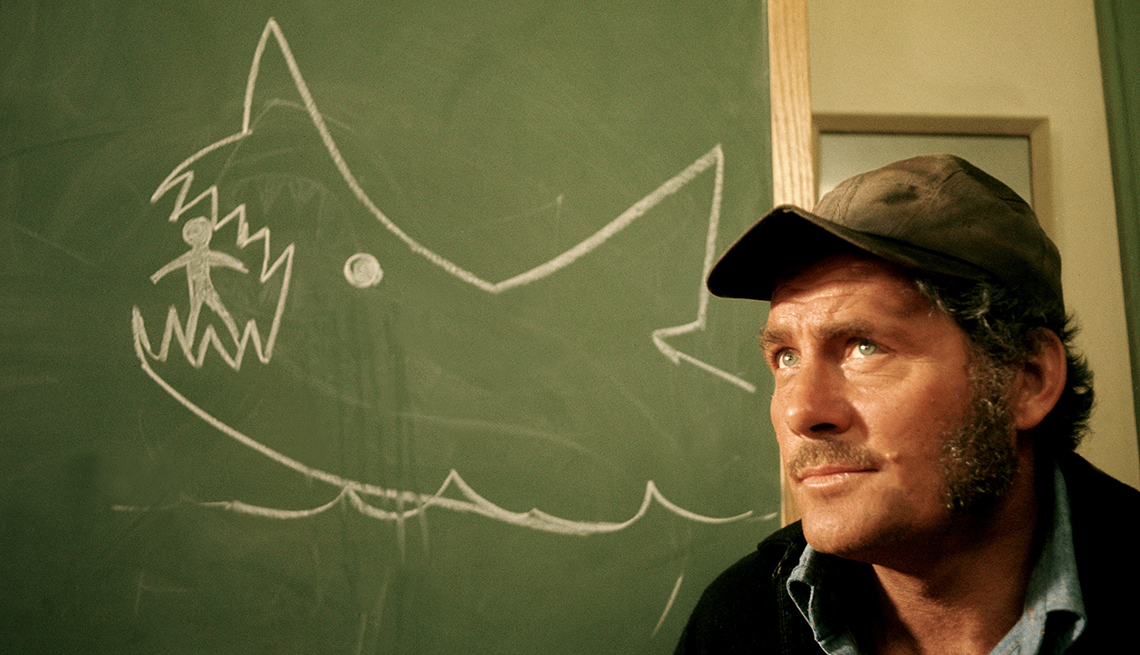
What I put into it has been rewarded by the JAWS fans (and the heathen) to be the book that was almost missing from the JAWS story and its lore. But don’t take my word for it! Listen:
‘QUINT is more than an uncannily brilliant impersonation of voice, it’s a story that feels like it was there from the start. This is a book to be swallowed whole’ EVIE WYLD
‘Excellent… a profound portrait of a life dislocated by war and violence’ THE TIMES, Best Summer Reads
‘Lautner … has carved out the literary missing link between Moby Dick and The Old Man and the Sea, and gone a long way to putting some of the balls back into serious English fiction’ Giles Coren, THE TIMES
‘Whisky-soaked, guttural, stinking and funny’ Evie Wyld, OBSERVER
‘QUINT brilliantly deconstructs a savage archetype that is scarce in today’s sanitised world… if Hemingway’s Old Man and the Sea was doused in whiskey and strained through the gills of a tiger shark, it would not sound dissimilar… one of this year’s literary miracles’ IRISH INDEPENDENT
‘Clear your diary. Strong, silent Quint is going to tell you his story ― and it’s the bastard child of WW2 and Moby Dick, the sweet spot between thrilling, brutal adventure and the poetic voice of the American working man, as if Raymond Chandler were a veteran deep-sea fisherman, steeped in Steinbeck and sneering at Hemingway… thrilling, brutal, poetic, literary and irresistible, one of the 21st century’s first great 20th-century American novels’ LOUISA YOUNG
‘An act of literary ventriloquism… uncanny… one of the most surprising literary miracles I’ve come across in a long time’ Hilary White, RTÉ
‘Highly enjoyable, and a must-read for any Jaws officionado’ BUZZ magazine
‘I loved its urgent voice, its layering of such a complex character, and its deft handling of the uncanny valley between Benchley’s character and Robert Shaw’s enduring screen portrayal’ SCOTTISH FIELD
My penny in the discussion of AI with regards to writing isn’t new or different philosophically but I do have an opinion.
I’ve been following the AI train for quite a while because I’m middle aged and I’m like that Back To The Future meme: “Hey, I’ve seen this one.”
Like most things in this first quarter of the 21st century (I myself being born in the second Elizabethan age of the late 1900’s) it’s a partial scam.
The fourth industrial revolution is supposed to be: medicine, green and technology. That’s a generalisation but includes AI, its forms. and automation.
Like all frontiers of investment and development for every actual genius making a single sustainable leap there’s a thousand carpet baggers and snake oil hawkers pulling in gullible punters (investors). These, as tradition and nature shows, will be the most colourful and loudest showmen. This, combined with the grifter’s idiom that no-one likes to admit they’ve been fooled and the strange conceit that billionaires cannot be idiots or believe themselves capable of being duped like the rest of us, because somehow you can’t be dumb and rich, is the point we’re at now.
In a very short time AI, instead of being the Ouroboros of death and birth, has become the dog chasing its own tail.
At our current stage AI is eating itself, and, like the dog chasing its own tail, it’s also eating its own vomit.
Initially the concept was that AI would consume the world’s data, with the help of human programmers, and generate results from that information. Eventually it won’t need the human element, much like no human involvement is made in programming chips any more, the chips make the future chips themselves because they have gone beyond the programmer.
Actually, that’s quite worrying in itself.
The programmers are no longer capable of making the chips or the code. It’s been automated past their ability (by their own intention) to an almost quantum realm. We taught a rock to think and replicate.
When you see a guy in a leather jacket and jeans on stage introducing the next generation GPU or chip none of his or his team’s ideas were on a drafting table or in any development other than a language of code they can no longer read. A GPU created that GPU. And, because the coding in its development doesn’t consider heat or resources (because its a rock that thinks on a level outside the earth) all the GPU wants is more power and energy, and so the data centres and servers running the show also only require more power and energy until we find ourselves in the situation where water is rationed in Taiwan because the factories require the water to cool the chips making the chips rather than the people living and farming outside it. And don’t forget the heat coming out of these fields of data servers warming up the planet nicely and sucking all the energy resources. But your TV on standby is the problem.
Yeah, but what’s this got to do with writing or art?
Well, it goes back to the dog chasing its own tail. I don’t think anyone considered the circumstance that because the AI data would start to outweigh the human data the AI would start to regurgitate its own input. It’s getting worse but unable to recognise it’s getting worse because it’s using its “correct” information that it created badly in the first place.
Pure digression here but let’s take video games as an example.
Star Wars Outlaws just came out, a triple AAA game. A 2024 game.
Red Dead Redemption 2 came out in 2018.
You can look at comparisons of these two games on YouTube.
I guarantee that AI was involved in developing Outlaws because there is no way a human would program some of the flaws in that game. Or programmers have somehow gotten worse.
The concept is great, it looks good, but Pooh Sticks handles its environment and mechanics better.
RDR2 is beloved, years later. Once, in Red Dead, I randomly saw a fox chase and catch a squirrel. I shot the fox. I was able to go to the fox, the squirrel dead in its mouth, take the squirrel from its mouth and put it in my satchel and then skin the fox. In Outlaws you can walk through a speeder bike and punch storm troopers to death in a crowded room of other storm troopers. You can’t carry a weapon down a ladder.
In the past month alone we have watched supposedly huge games/films be universally mocked and fail at the cost of billions of dollars because a human possibly didn’t even draw the concept art let alone make them without some AI. Video games, movies, books, art, cannot just be concepts to be extrapolated. Yes, it can be done. Anyone can write a book. It doesn’t mean it’s a good book, and hell there are thousands of shit books, but surely you don’t want to read shit books? You don’t want to play shit games or watch shit movies.
I think this is what they forget. I’m not saying AI can’t write a good book or make good art or music but shouldn’t AI be doing the things we don’t want to do to give us, the humans, the time and desire to write the books and make the music? Shouldn’t that be the end goal?
I heard someone say recently, “Why would I bother to read a book no-one bothered to write?” And that’s almost exactly it. Why would I value a picture no-one painted or show up to a film no-one cared to make?
They also don’t consider (and the AI can’t) that humans are both fickle and discerning and contradictory and have been forever and do many, many things that don’t make sense or have purpose, probably because they don’t make sense or have purpose.
We domesticate wild animals and keep them in our homes, we both enjoy being entertained by things that make us laugh and make us cry, we eat food not for fuel but for pleasure, we like to do exhausting things and also like to do absolutely nothing.
No-one ever imagined that we would be content to watch a film on a device in our hand. They imagined we wanted bigger and bigger TVs, we wanted to fold them up like a map for some reason or have them appear in front of us on the wall and be invisible the rest of the time. No we didn’t, you didn’t ask. You may have asked a five year old or your rich mate but you didn’t ask us. We boil water over a flame the same as we’ve always done.
We’re more simple than they want, or need, us to be.
The smart device is a great example. We’re in love with them for about a week and then we just use them as egg-timers or alarm clocks. Not enough of us are going to use an app to brush our teeth but it’s there if you want it. You can subscribe.
AI will write books and screenplays, as well as most people. Not good, talented, skilled people, and it may never do so if it continues the model of eating it’s own infinite data to generate them or just steals actual people’s.
I can see it already in some TV and films. There’s dialogue and exposition that shouldn’t be there. A good human writer will know when silence is better, when a look is better, when the actor needs to project instead. Look for it: You can spot the AI because it fills in the gaps. It tells, doesn’t show. It fast travels, puts people or things exactly where they need to be with no step how they got there, only that they are needed and all with way, way too much dialogue, like a lawyer striving to obfuscate a jury.
It does the same in books. It leaves no gap for interpretation, says everything, tells everything, has no experimentation or craft, subtlety or nuance. Mediocre books and films, plays and art have always existed. Why do we want to emulate that?
Maybe it’s because, unwittingly or by design, AI intends to create a future without satire or parody or alternative commentary. It can’t emulate these things so it discards them as it’s not in its own data that it has consumed. It doesn’t know how lazy, contrary and contradictory we are because it doesn’t know we want to be like that sometimes or that we are like that.
And it’s not about creating. It’s about cost.
Capitalism no longer requires that the end user is satisfied for it to achieve success, those days are gone, companies are no longer interested in pleasing the consumer with the best service or product. The goal is monopolies, universal ownership and anti competitive logic, so there is no choice in service, only that the service was delivered. They got your money because you bought a pair of shoes from a choice of five companies all owned by the same asset firm who also happen to be the majority shareholders. (My coat example at the end of this piece).
The dream is to have nobody being paid to be working in the warehouse, nobody to be paid for manufacturing, nobody to be paid for delivering. Robots to do it all and a robot will fix the robot when it breaks.
Companies are satisfied that only “content” is enough, not quality. Meh is fine, because the market is all owned by the same companies and the loss from one is a gain for the other they also own.
Regarding goods and services the model is only that something was delivered on time and at the price they stipulate you pay. Doesn’t have to be a “good” product, that’s not the objective.
The ideology is to remove human labour cost from production and creation, typically the most expensive resource so obviously it would be the one your shareholders would want to eliminate if able, and they see it happening because they want it to happen. You can’t keep generating profits exponentially year on year in a world where consumer’s buying power is lower so you have to cut labour and manufacturing costs by removing the human to keep the profits, which aren’t profits, rising for the shareholders who also happen to be the asset holders. Every year we see company profits rise and then look around at the poverty and destitution and wonder how. It’s not price gouging, it’s cutting costs. The profits are generated by them spending less not because we’re buying more. It’s a trick.
Here’s a quote from The Hollywood Reporter regarding Lionsgate’s development with Runway AI and their IP’s: “Runway… will help us utilize AI to develop cutting edge, capital efficient content creation opportunities.”
That doesn’t sound like a sentence you want a creative to say, but it is a sentence you’d expect from someone who doesn’t want to pay people for creating and just wants John Wick 14 when Keanu is dead. (Also Lionsgate doesn’t seem too concerned that Runway is currently being sued for copyright infringement).
It doesn’t matter if the films or the games fail, they don’t care, because the money went from one pocket to another pocket of the same coat, and you didn’t have skin in that game.
I was on BBC Radio 4’s Front Row the other day, which is one of their cultural arts programmes, as they’d invited me as part of a segment on JAWS. what with the whole 50th thing coming.
It was only brief and we were talking about shark movies in general and the legacy of JAWS in that regard what with two summer shark movies being released (Under Paris and Something in the Water).
It made me think of what is the actual legacy of JAWS?
There are probably quite a few TBF, ranging from the impact on the blockbuster as a genre to the marketing and crafting of movies, but I wanted to consider one perhaps less obvious, and personal, either individually or as a group.
As an older JAWS fan I can see how the movie has grown with me over the years and how it resonates with different ages from perspective.
When you’re a kid it’s certainly a horror movie. I was lucky enough (or unlucky at the time) to see JAWS in the cinema, although I hid behind a seat for most of it.
Then, as a teen, it becomes a summer movie, an escapism, something fast consumed with action and heroes and a (literally) explosive ending, a satisfying not too “deep” watch before dinner that gets the adrenaline flowing in a not too intense manner. You enjoy it for its surface and it doesn’t mess you around or cheat you.
Then, as you get older you can see more into it. JAWS grows with you. As an adult you’ve watched thousands of movies by now and you begin to appreciate the crafting of the film, particualy Verna Fields editing, the dialogue and the humour, the characters and their arcs.
To many of us JAWS was the movie where (if we’d grown up with it) we learned to discern movies. Instead of just munching on any old dross they would chuck out for kids we began to notice what made films good or bad.
It was subtle but somehow JAWS pervaded us with its delicate approach and its use of camera and music, of shooting angles, sound, light and composition, enough that we could now see where all this was lacking in other films and subconsciously acknowledge when we saw it in a film, which could have eluded us if we didn’t have this burned in appreciation of JAWS in our psyche.
As I’m writing the film that immediately comes to mind is Marathon Man (which I’ve just looked up was ‘76 and it probably just popped in because of Roy).
Again I would have seen this on the TV as a kid but could immediately tell as I watched that this was a “good” movie. And I can see JAWS in it. Do you know what I mean? You can spot it. I think JAWS did that for us, some of us at least.
In the piece on the radio the presenter, Antonia Quirke who has written a BFI Classics book on JAWS, delighted me when she said how JAWS seems to have always been with her, that she couldn’t remember a time when JAWS wasn’t around. I know what she means. It’s almost like JAWS is always still lurking near every movie you watch, that without even considering it, the shark is still working on us, circling silently. The landlord of film, getting his rent due.
Jan 2024. Never actually thought we’d make it out of ‘23 TBH.
Where I am, in Pembrokeshire, it’s raining, raining hard. It’s been raining pretty much every day since December.
The ground is flooded, the garden’s dead, we’ve had back to back storms and dozens, yes, dozens, of power cuts. My PC died on Christmas morning, couldn’t take the power cuts any more. I needed a new mobo, cpu and ram. But this was that time of the year when everything stops. Amazingly I managed to get everything delivered by the 28th and got back up and running by the evening. Now, after the long, long stretch of the end of ‘24 I can think of what lies ahead.
Every now and then I have to remind myself I have a new book coming out, and now, after years of waiting for it, I’m now just four weeks away from Quint being published. That didn’t happen last year, in fact, I haven’t had a book published since 2018.
For most of us ‘23 has been a hard year, and I’m heading into this year, like millions of others, with less money and more debt than I started last year. Every thing coming in is less, every thing going out is more. But I’ve got to put hope into this book, I’ve got to get behind it more than any other book I’ve written because it means so much to me.
I know that might sound odd (it’s a book about Quint from JAWS, how serious can it be?) but it’s a novel that I think has a perfect timing and resonance for today. And I’m serious.
There are themes and attitudes in the novel that when I re-read it seem to be all around us now but there is hope in the story. Obviously we all know Quint’s ultimate fate so I made this book to end on a comparatively more positive outlook and when we see Quint in JAWS he’s not exactly a negative person, in fact I’d argue he’s the jolliest asshole out of the cast, so I wanted to roll into that character, the comedy of his life, the tragedy of his life and how at the end of it he’s still smiling and singing (until those black eyes roll over white, of course).
Feb 2024 it’s out. I hope you like it and let me know what you think.


 robertlautner